

Best Non-Toxic Baby Gifts: 2026 Buying Guide
Table of Contents
- What Makes a Baby Gift Truly Non-Toxic
- Best Non-Toxic Baby Gifts by Category
- Organic Baby Toys for Newborns: What to Prioritize
- Non-Toxic Baby Registry Essentials: A Category Checklist
- How to Choose Non-Toxic Baby Gear Without Overspending
- Allergy-Specific and Sensitive-Skin Considerations
- End-of-Life Disposal and Sustainability
- Top Non-Toxic Baby Gifts at a Glance: Quick Comparison
Last Updated: August 19, 2026
Choosing non-toxic baby gifts is one of the most meaningful decisions a new parent or gift-giver can make. At Tiny Adventures, we've curated products that meet genuine safety standards, not just marketing language. Many conventional baby products contain materials that off-gas volatile organic compounds, leach hormone-disrupting chemicals, or carry heavy metal residues. This guide breaks down what makes a gift truly safe, which certifications to trust, and seven specific non-toxic baby gifts worth buying.
Quick Picks:
- Best Feeding Gift: Silicone Suction Baby Feeding Set ($29.95), suction base, food-grade silicone, mess-free mealtime
- Best Newborn Gift: Newborn Cotton Muslin Swaddle Blanket ($19.95), soft natural fiber, hypoallergenic, zero-waste washable
- Best Developmental Toy: Montessori Makron Puzzle ($34.95), natural wood, fine motor skills, no synthetic coatings
What Makes a Baby Gift Truly Non-Toxic
A non-toxic baby gift is made from materials that do not release harmful chemicals during normal use, including chewing, washing, or prolonged skin contact. "Baby-safe" labeling is not federally standardized the way certifications like GOTS or OEKO-TEX are. True non-toxic baby gifts are characterized by verified material composition, third-party testing, and transparent sourcing.

Certifications to Look For: GOTS, OEKO-TEX, and CPSC
GOTS (Global Organic Textile Standard) is the leading certification for organic cotton and natural fibers. Certified products must contain at least 70% certified organic fibers and meet strict limits on chemical inputs throughout the supply chain. For swaddle blankets, clothing, and soft toys, GOTS certification is the benchmark.
OEKO-TEX Standard 100 tests finished textile products for over 100 harmful substances, including formaldehyde, heavy metals, and phthalates. It certifies the final product rather than just raw fiber, making it particularly relevant for items that touch newborn skin directly.
CPSC (Consumer Product Safety Commission) governs mandatory safety requirements for children's products sold in the United States. The CPSC children's product safety regulations require third-party testing for lead, phthalates, and structural hazards before products can legally be sold for children under 12. This is the regulatory floor; GOTS and OEKO-TEX represent higher voluntary standards.
Materials to Avoid: BPA, Phthalates, PVC, and Formaldehyde
BPA (bisphenol A) is an industrial chemical used in polycarbonate plastics and epoxy resins. BPA-free labeling is common, but also check for BPS and BPF, which are structurally similar replacements.
Phthalates are plasticizers added to PVC to make it flexible. They appear in soft plastic toys, vinyl changing mats, and some teethers. Phthalate-free products should be made from food-grade silicone, natural rubber, or solid wood instead.
PVC (polyvinyl chloride) is problematic in both production and disposal, releasing dioxins at both stages. Avoid PVC in bath toys, bibs, and play mats.
Formaldehyde off-gasses from pressed wood products, certain fabric finishes, and some paints. Nursery furniture and wooden toys with synthetic coatings are the most common sources. Look for formaldehyde-free and VOC-free labeling.
Best Non-Toxic Baby Gifts by Category
The seven products below are drawn from Tiny Adventures' curated selection. Each is chosen for material safety, developmental value, and price point.
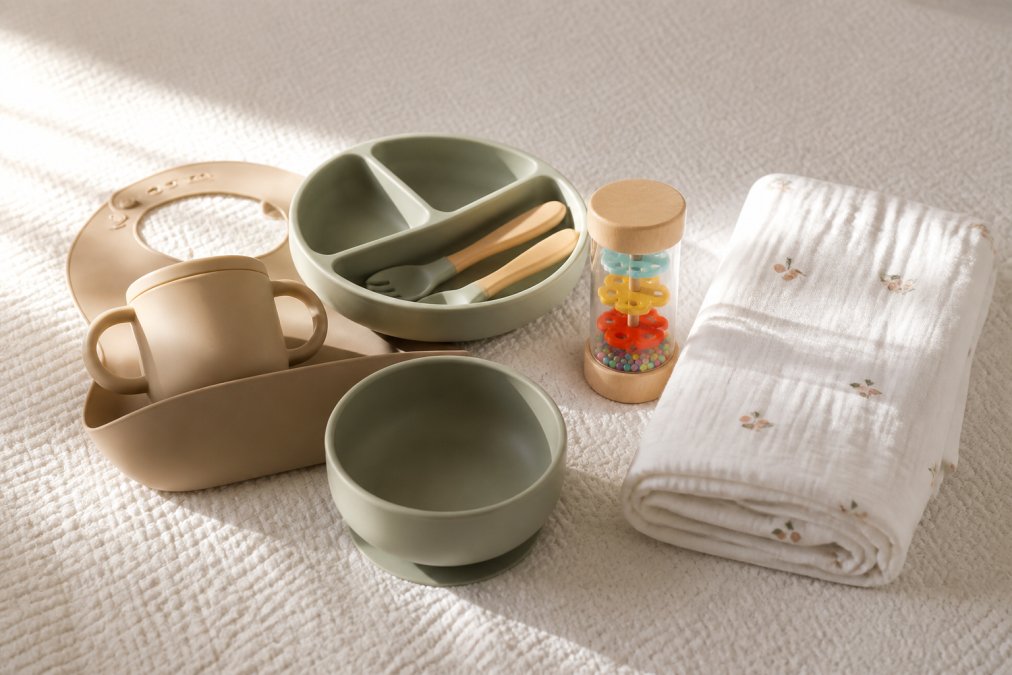
1. Silicone Suction Baby Feeding Set ($29.95)
Food-grade silicone is the safest material for infant feeding dishes. The Silicone Suction Baby Feeding Set features a suction base that keeps dishes anchored to the highchair tray, reducing mess and encouraging independent eating habits around 6-9 months. The material is BPA-free and phthalate-free by definition. It's dishwasher-safe for quick sanitation.
Best for: Babies 6 months and up starting solid foods.
2. Silicone Baby Food Feeder Set ($26.95)
The Silicone Baby Food Feeder Set introduces fresh fruits and vegetables before babies have the jaw strength to manage whole pieces safely. The soft, perforated silicone pouches let babies suck out juice and pulp while the mesh prevents choking. This feeder builds oral motor skills needed for speech development.

Best for: Babies 4-8 months beginning food exploration.
3. Silicone Baby Feeding Spoons ($17.95)
The Silicone Baby Feeding Spoons are the most affordable entry point at $17.95. Made from food-grade silicone, the soft tip is gentle on emerging gums and new teeth during teething. The included storage box keeps spoons clean during transport.

Best for: Newborns through toddlers; an ideal stocking-stuffer or add-on gift.
4. Newborn Cotton Muslin Swaddle Blanket ($19.95)
Natural fibers are the right choice for anything that stays against newborn skin for hours. The Newborn Cotton Muslin Swaddle Blanket is made from cotton muslin, a breathable, hypoallergenic weave that regulates temperature better than synthetic alternatives and softens with each wash. The 80x80cm size works from birth through roughly 2.5 years.
Best for: Newborns and infants; ideal for parents concerned about sensitive skin.
5. Wooden Rain Sound Toy ($24.95)
The Wooden Rain Sound Toy is made from high-quality wood and functions as a rain sound tube, music stick, or rainmaker. It introduces children to cause-and-effect learning through sound, one of the earliest forms of cognitive development. With no synthetic coatings, there's no off-gassing concern in the nursery.
Best for: Babies 6 months and up; a strong gift for musically curious families.
6. Montessori Makron Puzzle ($34.95)
The Montessori Makron Puzzle targets fine motor skill development through color sorting and stacking. The wooden puzzle pieces are sized for toddler hands, and the Montessori method emphasizes self-directed learning. Natural wood construction means no PVC, BPA, or formaldehyde-based coatings.
Best for: Children aged 1 and up; strong developmental toy for baby shower gifting.
7. DIY Baby Print Keepsake Frame ($42.95)
The DIY Baby Print Keepsake Frame is a wooden commemorative frame that captures hand and footprints in clay. The wooden frame construction avoids off-gassing associated with MDF or particleboard. This creates a permanent keepsake rather than a consumable.
Best for: Baby showers, first birthdays, and milestone celebrations.
Organic Baby Toys for Newborns: What to Prioritize
Organic baby toys for newborns should prioritize three material properties: no synthetic coatings, no small parts, and no off-gassing materials in the nursery environment.
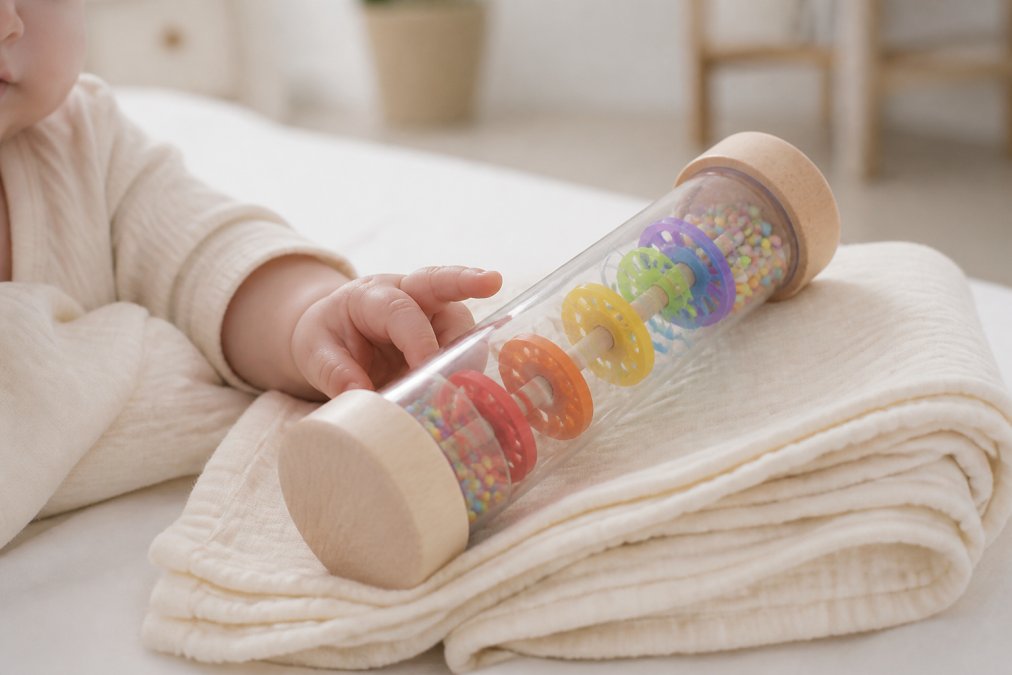
Newborns interact with the world primarily through touch and sound in the first three months. The most developmentally appropriate organic baby toys for this stage are tactile and auditory: natural rubber teethers, wooden sound instruments, and soft cotton sensory items rather than complex mechanical toys.
Toys stored in a closed nursery off-gas into a small, often poorly ventilated space. A single piece of furniture or toy with synthetic coatings can meaningfully affect indoor air quality over weeks. Choosing VOC-free and plant-based materials isn't just about skin contact, it's about what babies breathe.
Non-Toxic Baby Registry Essentials: A Category Checklist
Building a non-toxic baby registry is easier when you approach it by category. The checklist below covers core areas where material safety has the most direct impact on newborn health.
Non-Toxic Baby Registry Checklist:
- Feeding: Food-grade silicone dishes, BPA-free feeders, soft-tip spoons (no melamine)
- Sleep: GOTS-certified organic cotton sheets, formaldehyde-free crib mattress, muslin swaddle blankets
- Bath: Plant-based, fragrance-free wash; no parabens or sulfates; natural rubber bath toys instead of PVC
- Skincare: Hypoallergenic, fragrance-free lotions; no mineral oil or synthetic dyes
- Diapering: Chlorine-free diapers or cloth diapers in natural fibers; plant-based wipes
- Play: Natural wood or natural rubber toys; OEKO-TEX certified soft toys; no PVC play mats
- Nursery: Low-VOC paint; solid wood furniture over particleboard; GREENGUARD-certified products
Prioritize feeding and sleep items first, these have the longest daily contact time with newborn skin.
How to Choose Non-Toxic Baby Gear Without Overspending
The most common mistake parents make is treating every product category as equally urgent. Some categories warrant spending more on certified organic options; others offer genuine savings with minimal safety trade-off.
Organic vs. Conventional: Where the Price Difference Is Worth It
| Category | Worth the Premium? | Why |
|---|---|---|
| Crib mattress | Yes, prioritize | Longest daily contact; off-gassing in enclosed sleep space |
| Muslin swaddle blankets | Yes | Direct skin contact for hours; natural fibers breathe better |
| Feeding dishes and spoons | Yes | Food contact + mouthing; silicone is affordable anyway |
| Wooden toys | Yes | Avoid synthetic coatings and PVC; natural rubber or wood lasts longer |
| Nursery furniture | Yes, GREENGUARD if possible | VOC off-gassing in small room affects air quality |
| Decorative items (wall art, mobiles) | No, conventional is fine | Minimal contact; not a meaningful exposure pathway |
| Clothing for older toddlers | Moderate | Less skin contact time than newborn items |
Spend on anything involving prolonged skin contact, food contact, or placement in an enclosed sleep environment. Save on decorative items and occasional-use products.
Buying Second-Hand Safely
Second-hand shopping reduces costs on non-toxic baby gear, but requires verification. Never buy a used crib mattress, mattresses accumulate moisture, mold spores, and bacteria that no surface cleaning removes.
For second-hand toys and feeding items, verify three things before purchasing:
- Check the CPSC recall database. The CPSC product recall search tool lists all children's products recalled for safety hazards.
- Inspect for wear that changes safety status. Chipped paint on wooden toys, cracked silicone on feeders, or frayed fabric on soft toys create exposure risks.
- Confirm the product predates 2011 if it's plastic. The Consumer Product Safety Improvement Act (CPSIA) significantly tightened phthalate and lead limits from 2011 onward.
Allergy-Specific and Sensitive-Skin Considerations
Parents of babies with known allergies or sensitive skin need a more targeted approach.
Latex allergy: Natural rubber, while excellent in general, is derived from rubber tree latex. Babies with latex sensitivity should avoid natural rubber teethers. Food-grade silicone is the correct alternative.
Wool sensitivity: GOTS-certified wool is free of harsh chemical treatments, but wool itself is a common irritant. For sensitive skin, GOTS-certified organic cotton is safer.
Fragrance sensitivity: Many "natural" baby skincare products contain essential oils that are allergenic. Look for both fragrance-free and hypoallergenic labeling.
The American Academy of Pediatrics recommends fragrance-free products for newborns and infants with eczema-prone skin. When gifting without knowing a baby's allergy profile, wooden toys and food-grade silicone feeding items are the safest universal choices.
End-of-Life Disposal and Sustainability
Most guides on non-toxic baby gifts stop at purchase. The environmental impact afterward matters.
Silicone: Food-grade silicone is not biodegradable but is more durable than plastic and has a significantly longer useful life. Many silicone baby products can be sanitized and passed to subsequent children. Silicone cannot be recycled in standard curbside programs; check for specialist silicone recyclers in your area.
Natural wood: Solid wood toys are among the most sustainable baby products available. They biodegrade, can be composted if uncoated, and are safe to donate or resell without the safety concerns that apply to plastic items.
Cotton muslin: Natural cotton is biodegradable and compostable at end of life, provided it hasn't been blended with synthetic fibers. 100% cotton muslin can go into a textile recycling program or compost bin when worn out.
Zero-waste gifting tip: Wrap non-toxic baby gifts in a muslin swaddle blanket rather than paper or plastic packaging. The wrapping itself becomes part of the gift.
Top Non-Toxic Baby Gifts at a Glance: Quick Comparison
| Gift | Price | Material | Best For | Age Range |
|---|---|---|---|---|
| Silicone Suction Baby Feeding Set | $29.95 | Food-grade silicone | Solid food transition | 6 months+ |
| Silicone Baby Food Feeder Set | $26.95 | Food-grade silicone | First food introduction | 4-8 months |
| Silicone Baby Feeding Spoons | $17.95 | Food-grade silicone | Daily feeding; budget gift | Newborn+ |
| Newborn Cotton Muslin Swaddle Blanket | $19.95 | Natural cotton | Sensitive skin; newborn sleep | 0-2.5 years |
| Wooden Rain Sound Toy | $24.95 | Natural wood | Auditory development | 6 months-12 years |
| Montessori Makron Puzzle | $34.95 | Natural wood | Fine motor skills | 1 year+ |
| DIY Baby Print Keepsake Frame | $42.95 | Natural wood | Milestone keepsakes | Newborn |
Every product in this comparison is available through Tiny Adventures, rated 4.9/5 by more than 5,000 customers.
For parents navigating the full registry process, EPA guidance on reducing children's chemical exposure at home provides a useful framework for prioritizing which product categories carry the highest chemical exposure risk.
Frequently Asked Questions
What should I avoid when buying non-toxic baby gifts?
Skip products made with BPA, phthalates, PVC, and formaldehyde-based finishes. These chemicals appear in some plastic toys, synthetic fabrics, and foam padding. For feeding items, choose food-grade silicone or natural rubber over hard plastics with recycling codes 3 or 7. For clothing and bedding, look for GOTS-certified organic cotton rather than conventionally grown cotton, which is often treated with pesticide residues that can irritate newborn skin.
What certifications confirm a baby product is genuinely non-toxic?
GOTS (Global Organic Textile Standard) is the gold standard for organic cotton textiles, covering both materials and manufacturing. OEKO-TEX Standard 100 certifies that every component of a product has been tested for harmful substances. For toys, look for CPSC compliance under the Consumer Product Safety Improvement Act (CPSIA), which sets federal limits on lead and phthalates in children's products. Products carrying these marks have been independently tested, not just self-certified by the manufacturer.
Are organic baby gifts actually worth the higher price?
For items with direct skin or mouth contact, such as swaddle blankets, feeding spoons, and teethers, the price difference is generally worth it. Organic cotton and food-grade silicone reduce exposure to chemical residues during the months when babies are most vulnerable. For items with no direct contact, like decorative frames, the premium matters less. Buying a few high-quality non-toxic essentials rather than a full conventional set is a practical middle ground for budget-conscious parents.
How do I verify a second-hand baby product is still safe and non-toxic?
Check the CPSC recall database at cpsc.gov before buying any used baby item. For older plastic products, avoid anything manufactured before 2009, when CPSIA phthalate limits took effect. Inspect wooden toys for chipped paint or splinters, and confirm any finish is still intact. Soft goods like blankets should be washed in hot water before use. When in doubt on feeding items or teethers, buying new is safer than risking unknown chemical exposure from degraded materials.
What are the most useful non-toxic baby gifts for a newborn?
The most practical non-toxic baby gifts cover daily routines: a muslin swaddle blanket for sleep and swaddling, food-grade silicone feeding spoons for the transition to solids, and a natural-material toy for early sensory development. A wooden toy like a rain sound tube introduces sound and texture without plastic or electronic components. For a memorable gift, a DIY keepsake frame lets parents capture handprints and footprints in the first weeks without chemical-heavy craft kits.
Choosing safe, non-toxic baby gifts shouldn't require a chemistry degree. Tiny Adventures makes it straightforward with a curated selection of food-grade silicone feeding products, natural wood toys, and organic cotton essentials, all vetted for the material standards that actually matter. Shop the full collection and find the right gift for every stage of early development.
This article was written using GrandRanker