

Best Developmental Toys for 2 Year Olds (2026)
Table of Contents
- Why Developmental Toys for 2 Year Olds Matter at This Age
- Developmental Milestones at Age 2: A Quick Checklist
- Toddler Fine Motor Skill Toys: Top Picks That Actually Work
- Montessori Toys for 2 Year Olds: Open-Ended Learning at Its Best
- Active Play, Sensory Exploration, and Gross Motor Picks
- How to Choose Developmental Toys Without Wasting Money
- Conclusion
Last Updated: August 19, 2026
Choosing the right developmental toys for 2 year olds is one of the most impactful decisions you can make during this critical window of early childhood. At Tiny Adventures, we've curated products specifically for this stage because age two is when cognitive leaps, language explosions, and motor skill development all collide at once. The right toy actively builds the neural pathways your child will rely on for years. Below, we map specific toy categories to real developmental milestones, flag what to avoid, and share our top picks so you can shop with confidence.
Quick Picks:
- Best Fine Motor Toy: Montessori Makron Puzzle, colorful stacking and sorting that builds hand-eye coordination
- Best Open-Ended Toy: Domino Train Playset, STEM foundations through spatial thinking and sequencing
- Best Active Play Pick: 4Wheels Balance Bike, gross motor skill development with built-in safety design
- Best Budget Pick: Sticky Ball Dart Board at $19.95, throwing skills and hand-eye coordination for less
Why Developmental Toys for 2 Year Olds Matter at This Age
Age two is not a plateau, it's a sprint. Toddlers are processing language rapidly, testing cause and effect constantly, and developing the fine and gross motor skills that underpin everything from writing to sports.

Developmental toys are play materials engineered to support specific cognitive, motor, or social-emotional growth milestones. The distinction matters because a toy that's too advanced frustrates, while one that's too simple bores. Age-appropriate toys sit in what educators call the "just right" challenge zone.
Two-year-olds learn through tactile learning and repetition. They'll sort the same shapes a hundred times, and that repetition builds sequencing logic, color recognition, and spatial awareness. Open-ended play materials, particularly wooden toys and manipulatives, support independent play without scripting what the child should do next.
According to American Academy of Pediatrics guidance on play, play is the primary vehicle through which young children develop cognitive and social skills.
Developmental Milestones at Age 2: A Quick Checklist
Before buying anything, it helps to know what's actually happening developmentally. This checklist maps the milestones most two-year-olds are working through and the toy categories that support each one.
Cognitive and Language Milestones
Two-year-olds are building early learning concepts fast. Most are working toward:
- Using 50+ words and beginning to combine two-word phrases
- Identifying basic colors and shapes
- Completing simple matching games and shape sorting tasks
- Beginning to understand cause and effect
- Engaging in simple pretend play
- Following two-step instructions
Toys that support these milestones include puzzles, color sorters, stacking sets, and any toy that requires the child to predict an outcome before acting. Language development accelerates when play involves naming objects, colors, and actions.
Motor and Social-Emotional Milestones
Motor development at two splits into fine motor skills (small, precise hand movements) and gross motor skills (whole-body coordination).
- Running, jumping, and beginning to kick a ball (gross motor skills)
- Scribbling with crayons and turning pages in books (fine motor skills)
- Stacking four to six blocks without toppling (hand-eye coordination)
- Showing preference for certain toys or play partners (social-emotional growth)
- Attempting to dress/undress independently (fine motor + self-sufficiency)
- Beginning parallel play alongside other children
The most effective developmental toys target both tracks simultaneously. A balance bike builds gross motor skills and spatial awareness. A stacking puzzle builds fine motor skills alongside logical thinking.
| Milestone Category | Key Skills | Best Toy Types |
|---|---|---|
| Cognitive | Color/shape recognition, cause and effect | Sorters, puzzles, matching games |
| Language | Naming objects, two-word phrases | Story cards, interactive play sets |
| Fine Motor | Pinching, stacking, threading | Wooden puzzles, manipulatives |
| Gross Motor | Running, jumping, balancing | Balance bikes, active play toys |
| Social-Emotional | Parallel play, sharing | Group games, cooperative toys |
Toddler Fine Motor Skill Toys: Top Picks That Actually Work
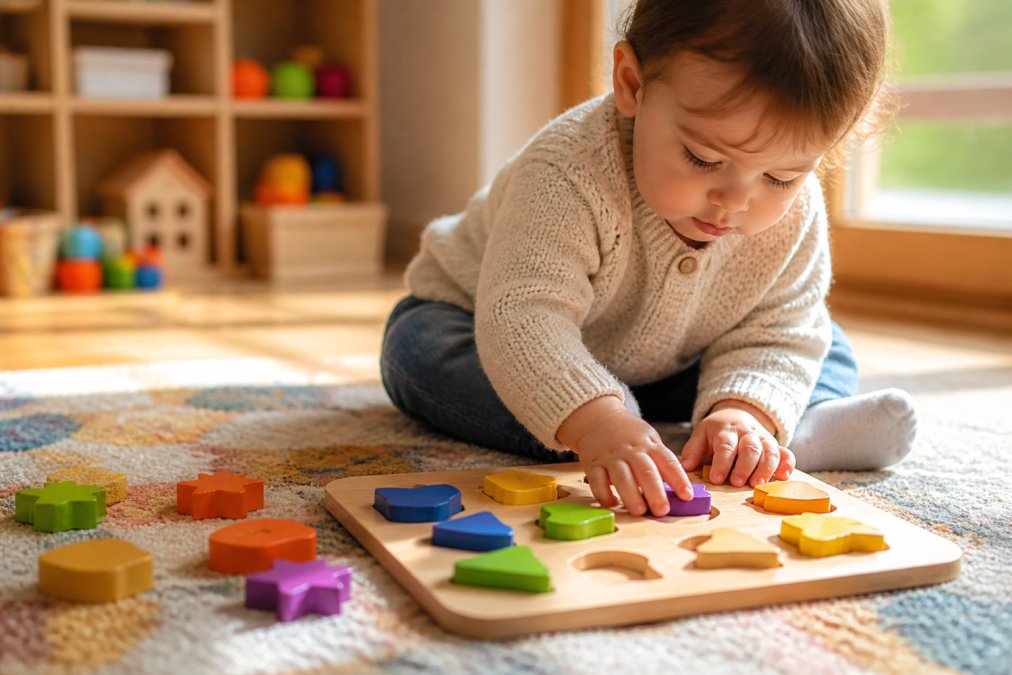
The biggest mistake parents make with fine motor toys is buying ones that are too fiddly for a two-year-old's grip strength. Small beads, thin threading lace, and tiny puzzle pieces are designed for older children. The sweet spot is chunky pieces, bright colors, and satisfying tactile feedback.
1. Montessori Makron Puzzle, $34.95
The Montessori Makron Puzzle is the top pick for fine motor skill development. Colorful wooden pieces encourage sorting and stacking, which directly builds hand-eye coordination and pincer grip. The chunky design is appropriate for two-year-old hands. Customer Oliver N. noted: "The puzzles help my daughter with shapes and colors," while Jon P. added: "My toddler uses the wooden puzzles every day." That daily engagement is exactly what skill-building requires.
2. USB Rechargeable Kids Fishing Toy, $52.95
The USB Rechargeable Kids Fishing Toy turns hand-eye coordination practice into interactive play. Children use a small rod to catch spinning fish, which demands precision grip and timing. It also supports color recognition and problem-solving.
3. Sticky Ball Dart Board, $19.95
At $19.95, the Sticky Ball Dart Board is the best budget fine motor pick. Throwing sticky balls at a target builds hand-eye coordination and throwing mechanics without safety risk.
Montessori Toys for 2 Year Olds: Open-Ended Learning at Its Best
Montessori-inspired play rests on a specific principle: the child leads, the toy follows. Unlike battery-powered toys that script the interaction, Montessori toys for 2 year olds present an invitation to explore without a predetermined outcome. That open-ended play structure builds creative expression, independent play habits, and logical thinking simultaneously.
Note that "Montessori" has no legal definition; any toy can use the label. What actually matters is whether the toy is open-ended, made from natural or non-toxic materials, and sized appropriately for the child's developmental stage.
1. Domino Train Playset, $49.95

The Domino Train Playset is a standout STEM foundations toy. Children arrange 60 dominos in sequences, load them onto a train rack, and watch the chain reaction unfold. This directly builds spatial awareness, sequencing, and cause-and-effect understanding. The dominos feature non-toxic paint and smooth edges, important details for a two-year-old who still mouths objects occasionally.
2. Montessori Toy Chess Game for Kids, $19.95
The Montessori Toy Chess Game for Kids is more accessible than it sounds. At two, children aren't playing chess; they're using the jigsaw board and pieces for matching games, shape sorting, and early pattern recognition. At $19.95, it's one of the most affordable skill-building options.

3. Wooden Rain Sound Toy, $24.95
The Wooden Rain Sound Toy introduces sensory exploration through sound. Tilting the wooden tube produces a cascading rain sound, which fascinates two-year-olds and builds cause-and-effect understanding. Made from high-quality wood, it's durable enough to survive rough toddler handling.
According to Zero to Three's guide on toddler development, open-ended toys that respond to a child's actions, rather than dictating them, are among the most effective tools for building cognitive flexibility in children under three.
Active Play, Sensory Exploration, and Gross Motor Picks
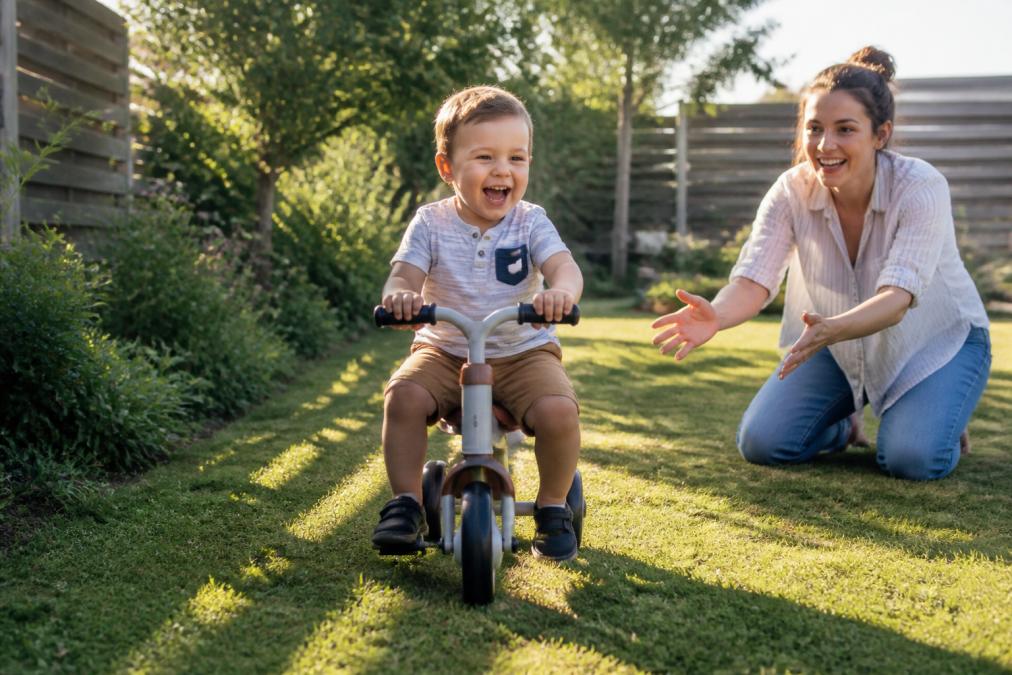
Sitting still is not a two-year-old's natural state. Gross motor skills develop through whole-body movement: running, jumping, climbing, and balancing. Toys that get toddlers moving build the physical confidence and body awareness that support preschool preparation and beyond.
1. 4Wheels Balance Bike for Kids, $69.95
The 4Wheels Balance Bike is the top gross motor pick for this age group. The 135-degree steering limit prevents sharp turns that cause falls, and the widened front wheels create a pyramid stability structure that reduces rollover risk. The low center of gravity design means two-year-olds can get on and off independently, building confidence alongside physical skill. Made from food-grade PP material, it's odor-free and durable enough to pass down to younger siblings.
2. Magic Bubble Blower Toy, $28.95
The Magic Bubble Blower Toy turns outdoor sensory exploration into a full-body experience. Chasing and popping bubbles requires running, reaching, and tracking moving objects, all of which build gross motor skills and visual tracking. The automatic bubble machine removes the lung-power barrier, so toddlers get continuous action.
3. Puzzle Foam Play Mat for Kids, $44.95
The Puzzle Foam Play Mat creates a safe surface for floor play, tumbling, and sensory exploration. Made from EVA foam, it provides cushioning for active play and doubles as a puzzle activity; children assemble the mat pieces themselves, which builds spatial reasoning.
How to Choose Developmental Toys Without Wasting Money
Most parents have a toy graveyard where expensive, untouched toys collect dust. The problem is almost never the child. It's a mismatch between the toy's design and the child's current developmental stage.
Safety and Non-Toxic Material Standards to Look For
Safety is non-negotiable. The relevant standard for toys sold in the United States is ASTM F963, the Consumer Product Safety Improvement Act's toy safety standard enforced by the Consumer Product Safety Commission toy safety guidelines. Look for toys that explicitly state ASTM F963 compliance.
For materials, prioritize:
- Non-toxic, water-based paints or dyes on wooden toys
- BPA-free and phthalate-free plastics
- Smooth, rounded edges with no sharp points
- Piece sizes larger than 3.2 cm (to reduce choking risk for under-threes)
- Natural wood or food-grade PP materials where possible
A common mistake is assuming "natural" or "wooden" automatically means safe. Check for specific certifications, not just marketing language.
Toy Rotation: Getting More Value From Fewer Toys
Toy rotation is the single most underused strategy in toddler play environments. Keep only a small selection of toys accessible at any time (typically five to eight items), and swap in "new" toys from storage every two to three weeks.
The benefits are real:
- Toddlers engage more deeply with fewer choices
- Toys feel novel again after a rotation, extending their developmental lifespan
- Play spaces stay manageable, supporting independent play habits
- Parents spend less money replacing toys that children are "bored with"
A practical rotation framework: keep one fine motor toy, one gross motor toy, one open-ended building or stacking toy, one sensory or sound toy, and one imaginative play item in rotation at any given time.
Budget-Friendly DIY Alternatives
Not every developmental activity requires a purchased toy. Many fine motor and sensory exploration activities use household materials:
- Sensory bins: Fill a shallow container with dried pasta, rice, or dried beans. Add small scoops and cups. This builds tactile learning, hand-eye coordination, and pouring skills. Supervision required.
- Stacking towers: Cardboard boxes, plastic containers, and yogurt cups stack as effectively as wooden blocks for basic spatial awareness practice.
- Matching games: Cut pairs of shapes from colored cardstock. Two-year-olds can match by color and shape, identical to commercial matching games at zero cost.
- Obstacle courses: Couch cushions, pillows, and low furniture create crawl-through and climb-over challenges that build gross motor skills as effectively as commercial active play equipment.
A mix of quality purchased toys and DIY activities beats either extreme. Invest in durable, multi-skill toys like the Montessori Makron Puzzle or the Domino Train Playset, and fill the gaps with household materials.
| Toy Category | Purchased Option | DIY Alternative | Skill Built |
|---|---|---|---|
| Fine Motor | Montessori Makron Puzzle ($34.95) | Cardstock shape matching | Hand-eye coordination |
| Sensory | Wooden Rain Sound Toy ($24.95) | Rice sensory bin | Tactile learning |
| Gross Motor | 4Wheels Balance Bike ($69.95) | Cushion obstacle course | Balance, coordination |
| Cognitive | Domino Train Playset ($49.95) | Stacking cardboard boxes | Sequencing, spatial awareness |
| Active Play | Magic Bubble Blower ($28.95) | Balloon toss | Tracking, reaching |
Finding the right developmental toys for 2 year olds doesn't have to mean guessing or overspending. Tiny Adventures offers a curated selection of age-appropriate, non-toxic developmental toys, from Montessori-inspired wooden puzzles to active play equipment, designed specifically to support the milestones your toddler is working through right now. With competitive pricing, frequent sales, and a 4.9/5 rating from over 5,000 customers, it's the kind of collection parents come back to. Shop Now and find the toys that actually move the needle on your child's development.
Frequently Asked Questions
What toys are developmentally appropriate for a 2 year old?
At age 2, children benefit most from toys that support fine motor skills, cause-and-effect understanding, shape sorting, and imaginative play. Good choices include wooden puzzles, stacking toys, simple matching games, balance bikes, and musical instruments. The best options are open-ended, age-appropriate, and made from non-toxic materials. Toys that grow with a child's skill level, like puzzles with increasing complexity, offer the most developmental value over time.
Do developmental toys actually help with motor skills and brain development?
Yes. Hands-on play with manipulatives like puzzles, stacking toys, and sorting sets directly builds fine motor skills, hand-eye coordination, and spatial awareness. Activities that require grasping, placing, and sequencing strengthen the small muscles children need for writing and self-care. Active play supports gross motor development. These aren't marketing claims, pediatric occupational therapists routinely recommend this type of skill-building play as a core part of preschool preparation.
What are the best Montessori-style toys for 2 year olds?
Montessori toys for 2 year olds emphasize independent play, real materials, and hands-on problem-solving. Top options include wooden color-sorting puzzles, stacking rings, simple matching games, and tactile sound instruments like rain tubes. The Montessori Makron Puzzle ($34.95) and Wooden Rain Sound Toy ($24.95) from Tiny Adventures are strong picks. Look for toys with no batteries, clear purpose, and enough challenge to hold attention without causing frustration.
How many toys does a 2 year old actually need?
Fewer than most parents think. Research on play behavior consistently shows that too many toys at once reduces engagement and creative thinking. A rotation of 8 to 12 toys, swapped out every two to three weeks, keeps play fresh and extends the life of each toy. This approach also makes it easier to observe which skills your child is actively developing, so you can introduce the next appropriate challenge at the right time.
What should I look for to make sure a toy is safe for a 2 year old?
Check that the toy meets ASTM F963, the mandatory U.S. toy safety standard enforced by the Consumer Product Safety Commission (CPSC). For materials, look for non-toxic paints and finishes, smooth edges, and no small parts that could pose a choking hazard, the CPSC defines a choking risk as any part smaller than 4.4 cm in diameter. Wooden toys with water-based finishes and BPA-free plastics are generally the safest choices for toddlers.
This article was written using GrandRanker