


Safe Clothing for Sensitive Skin: A Parent's Guide
Table of Contents
- Why Clothing Triggers Sensitive Skin Reactions
- Best Fabrics for Sensitive Skin: What Actually Works
- Fabrics to Avoid and Hidden Irritants in Clothing
- How to Wash Clothes for Eczema and Sensitive Skin
- Construction Details That Matter: Flat Seams, Tagless Labels, and Fit
- Non-Toxic Baby Clothing Brands and What to Look For
- Seasonal Layering Strategies for Safe Clothing Year-Round
- Choosing Safe Clothing for Sensitive Skin: Final Checklist
Last Updated: August 21, 2026
According to the National Eczema Association's eczema facts, approximately 31.6 million people, roughly 10% of the population, live with some form of eczema, and for many of them, getting dressed is one of the most uncomfortable parts of the day. At Tiny Adventures, we hear from parents constantly: their baby's skin flares after a new outfit, their toddler scratches through the night. Safe clothing for sensitive skin isn't a niche concern. It's a daily necessity for millions of families.
This guide covers what to look for, what to avoid, and how to build a wardrobe that your child's skin can actually tolerate.
Why Clothing Triggers Sensitive Skin Reactions
Most people assume eczema is purely internal. What touches the skin all day long can make or break a flare-up.
How Synthetic Fibers and Dyes Damage the Skin Barrier
Synthetic fibers like polyester and nylon are hydrophobic, they trap heat and moisture against the skin instead of releasing it, creating the warm, damp environment that triggers inflammation and breaks down the skin barrier.
Dyes are a separate problem. Research published in PubMed's textile dye dermatitis study notes that textile dye dermatitis is more common than previously believed, and standard patch testing often fails to detect it. Azo dyes, disperse dyes, and formaldehyde-based fabric finishes are common culprits. Chemical finishes applied during manufacturing, wrinkle-resistance treatments, softeners, flame retardants, add another layer of risk and are rarely disclosed on labels.
The Itch-Scratch Cycle Explained
Once irritation starts, it escalates fast.
"Heat and unbreathable fabrics can cause a flare. Once the inflammation is keyed up, it becomes a disease of overactivity. It makes you itchy, then you scratch your skin, and it further compromises it. You then have an itch-scratch cycle." -- Gibran Shaikh, M.D., Board-certified dermatologist and clinical instructor, Department of Dermatology at Mount Sinai Health System (Health Central, 2023)
Research from Clover and Direct Research's sensitive skin clothing study found that almost 80% of people with eczema suffer more when wearing clothes, experiencing scalding, itchiness from synthetic fibers, and irritation from labels and seams.
Best Fabrics for Sensitive Skin: What Actually Works
The best fabrics for sensitive skin share three qualities: they breathe well, manage moisture efficiently, and avoid harsh chemical processing.
Organic Cotton
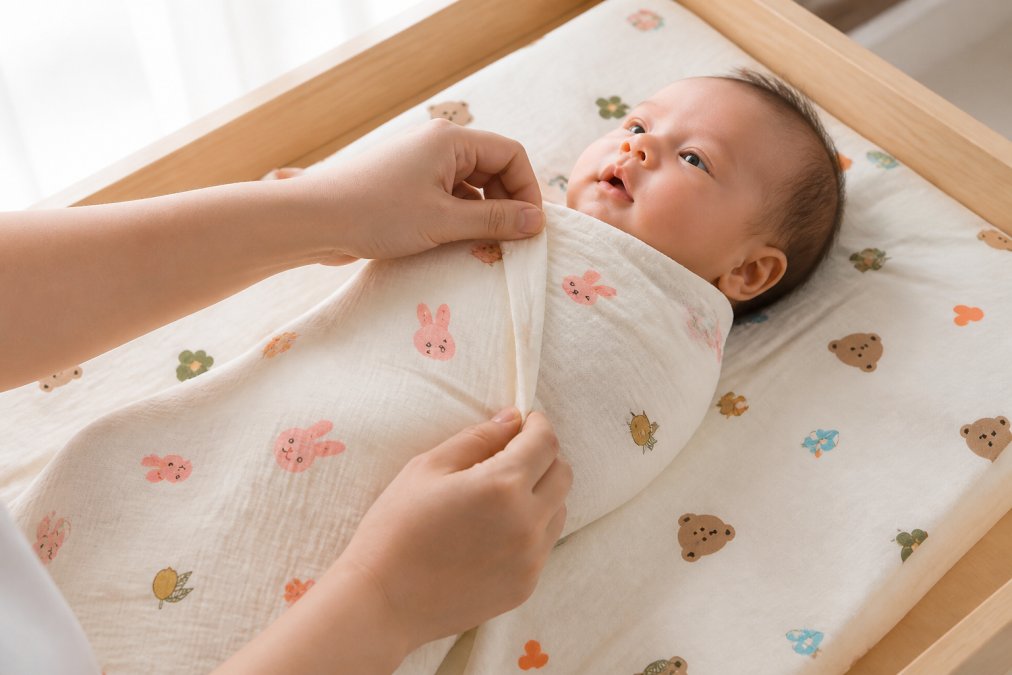
Organic cotton is the most accessible and widely trusted fabric for eczema-prone and sensitive skin. Certified organic cotton under the Global Organic Textile Standard (GOTS) must meet strict limits on chemical inputs at every stage, from field to finished garment. According to the Organic Cotton Market Outlook (2026), approximately 58% of American parents preferred organic cotton infant clothing specifically because of reduced chemical exposure concerns.
Organic cotton's longer fibers create a smoother surface with less friction against the skin. For babies, organic cotton muslin is particularly effective. The open weave structure provides excellent breathability and moisture-wicking, which reduces heat buildup, the primary trigger Dr. Shaikh describes. Tiny Adventures' Newborn Cotton Muslin Swaddle Blanket ($19.95) is made from soft cotton muslin designed for newborn skin from birth through age 2.5.

Merino Wool
Merino wool surprises most parents. Wool sounds scratchy, but merino's ultra-fine fibers sit below the threshold that triggers prickling on sensitive skin. A study published in the Dermatitis journal (2023) evaluated people with mild to moderate eczema wearing merino wool base layers versus standard clothing. Subjects showed significant improvement in eczema severity and quality of life with merino wool.
Merino keeps skin warm without overheating and wicks moisture away from the skin surface rather than holding it close. For winter layering on eczema-prone children, merino base layers are one of the most dermatologist-approved choices available. Quality merino garments are more expensive than cotton basics. Look for superfine merino (17.5 microns or below) for the softest feel.
Lyocell (Tencel) and Silk
Lyocell, sold under the brand name Tencel, is produced from beechwood pulp using a closed-loop manufacturing process that recaptures and reuses solvents. The result is a fiber that is exceptionally smooth, moisture-wicking, and breathable, with minimal chemical residue in the finished fabric.
A study in the Dermatitis journal (2023) had 30 people with eczema sleep in either 100% cotton or 100% lyocell pajamas and sheets for a week. Lyocell was the preferred fabric: subjects reported lower average itching and rated it higher for softness and moisture control.
Silk research from the Journal of Dermatology's silk fabric study found that silk clothing reduced itching and redness better than cotton and synthetic fabrics in patients with atopic dermatitis. However, some individuals react to the sericin protein naturally present in silk, so test on a small skin area first.
| Fabric | Breathability | Moisture-Wicking | Chemical Risk | Best For |
|---|---|---|---|---|
| Organic Cotton | High | Moderate | Low (GOTS-certified) | Everyday wear, newborns |
| Merino Wool | High | High | Low | Winter layers, eczema-prone skin |
| Lyocell (Tencel) | High | High | Very Low | Sleepwear, sensitive skin |
| Silk | Moderate | Moderate | Low-Moderate | Occasional wear, itch reduction |
| Conventional Cotton | Moderate | Low | Moderate-High | Not recommended for sensitive skin |
| Polyester | Low | Low | High | Avoid for sensitive skin |
Fabrics to Avoid and Hidden Irritants in Clothing
Avoiding the wrong fabrics matters just as much as choosing the right ones.
Synthetic Fibers That Cause Flare-Ups
Polyester, nylon, acrylic, and rayon are the most common synthetic fibers in children's clothing. They're cheap to produce and durable, but for sensitive skin, they're a consistent problem. Synthetic fibers don't breathe, they trap heat and moisture against the skin, creating the warm, humid conditions that worsen eczema. Acrylic in particular has a rough surface texture that causes mechanical irritation.
Rayon is often marketed as natural (it's derived from wood pulp) but is heavily processed with chemicals that remain in the finished fiber. Unless the label specifies lyocell or Tencel, treat rayon with the same skepticism as fully synthetic options.
Dye and Chemical Finish Sensitivities
Disperse dyes, used heavily in synthetic fabrics, are among the most common causes of allergic contact dermatitis from clothing and aren't required to be disclosed on garment labels. Chemical finishes are equally problematic. Wrinkle-resistant treatments typically use formaldehyde-releasing compounds. Flame retardant finishes, water repellents, and optical brighteners all add chemical load to the fabric surface and don't fully wash out.
How to Wash Clothes for Eczema and Sensitive Skin
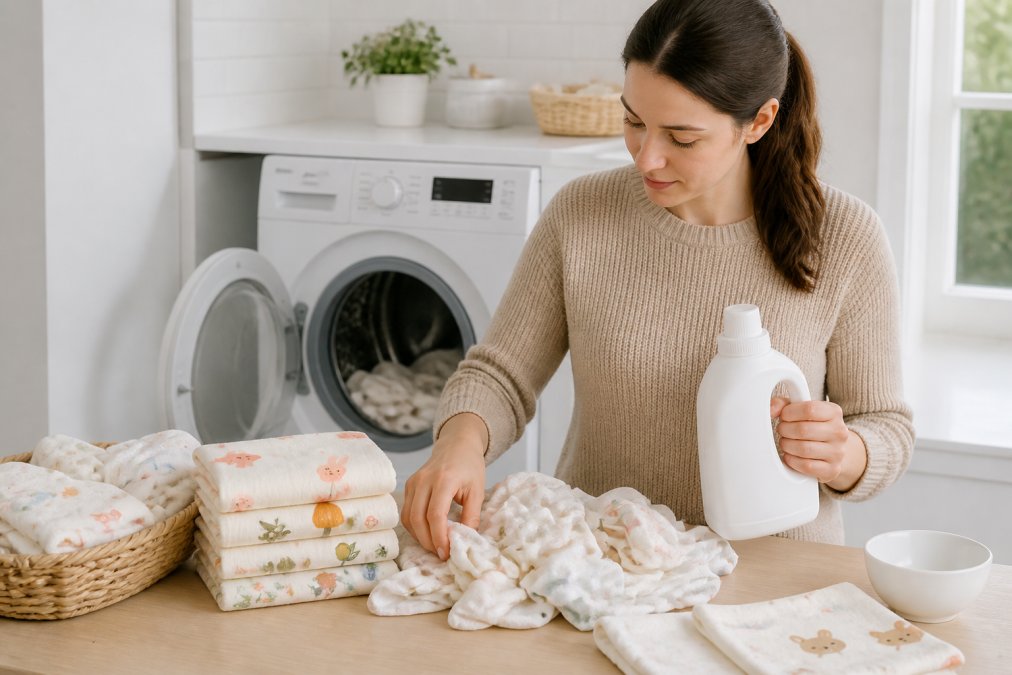
Knowing how to wash clothes for eczema is just as important as choosing the right fabric. A perfectly safe organic cotton garment can become a skin irritant if washed incorrectly.
Choosing a Detergent That Won't Cause Contact Dermatitis
Fragrance is the single biggest laundry trigger for sensitive skin. Most conventional detergents contain synthetic fragrances made from dozens of undisclosed chemical compounds, many of which are known skin sensitizers. "Free and clear" formulations, fragrance-free and dye-free, are the baseline requirement for eczema-prone skin.
Beyond fragrance, watch for optical brighteners, which remain on fabric after washing and can cause photosensitivity reactions. Fabric softeners and dryer sheets should be avoided entirely, they coat fabric fibers with fragrance and conditioning agents that stay on the fabric surface.
Washing New Clothes Before First Wear
New clothing carries the highest chemical load of any garment in the wardrobe. Manufacturing residues, shipping chemicals, and display treatments all accumulate on new fabric. For eczema-prone children, wash new clothes twice before wearing. Use the hottest water temperature the fabric label allows and an extra rinse cycle.
Construction Details That Matter: Flat Seams, Tagless Labels, and Fit
The fabric can be perfect and the clothing can still cause problems. Construction details are where a lot of eczema-friendly claims fall apart.
Flat-seam construction eliminates the raised stitching that runs along conventional seams. On regular garments, those seams press against skin at the wrists, ankles, and shoulders, exactly the areas where eczema tends to concentrate. Flat seams sit flush against the skin and eliminate a major mechanical irritant.
Tags cause localized irritation at the back of the neck and waistband. Tagless designs either print care information directly onto the fabric or use heat-transfer labels. If a garment still has a tag, cutting it out is the immediate fix, but tagless construction is genuinely preferable.
Fit matters more than most parents expect. Clothing that's too tight restricts airflow and increases friction. For babies, look for generous neck openings that don't require forcing the garment over the head. Avoid embellishments: buttons, rivets, zippers, and decorative hardware can all cause metal contact dermatitis. For children with very reactive skin, plastic closures and snap buttons are safer choices.
Non-Toxic Baby Clothing Brands and What to Look For
The market for non-toxic baby clothing has grown significantly. According to WiseGuyReports (2026), the global organic clothing market was valued at USD 18.3 billion in 2024 and is projected to reach USD 45 billion by 2035, driven largely by parent demand for chemical-free options.
Cottonique specializes in hypoallergenic, GOTS-certified organic cotton clothing dyed with non-toxic methods and omits itchy tags entirely. Mate the Label operates as a Certified B-Corp producing clothing without plastic, toxic dyes, or harmful finishes, using Tencel, organic fleece, and organic cotton with a strict restricted substances list.
"My clothing uses fabrics like recycled cotton and rose sylk, both of which are soft and wearable for all skin types, but especially great for those with sensitive skin." -- Hillary Taymour, Fabric Expert and Designer at Collina Strada (Happi, 2023)
When evaluating any brand's safe clothing claims, look for GOTS certification, OEKO-TEX Standard 100 certification, disclosure of dye types used (azo-free, reactive dyes are safer), a published restricted substances list, and flat-seam construction with tagless labeling explicitly stated in product descriptions.
Tiny Adventures' Cartoon Bear Baby Socks ($19.95) are made from soft cotton with anti-slip soles, a practical choice for babies and toddlers.

Seasonal Layering Strategies for Safe Clothing Year-Round
Safe clothing for sensitive skin requires a different approach in summer versus winter, and layering strategy matters as much as individual garment selection.
Summer: The priority is breathability and minimal layers. A single layer of organic cotton or lyocell is ideal. Avoid synthetic sun-protective clothing marketed for children, many UPF-rated garments are made from tightly woven synthetics that trap heat. Look for GOTS-certified organic cotton with a tighter weave for sun protection instead.
Winter: The biggest mistake is putting a synthetic base layer under an eczema-friendly outer layer. The base layer is what contacts skin all day, so it must be the safest fabric in the stack. Merino wool or lyocell as a base layer, followed by organic cotton mid-layers, is the most effective combination. Avoid wool outer layers that contact the neck and wrists directly.
Transitions (spring and fall): These are the trickiest seasons because temperature swings cause repeated heating and cooling cycles. Lightweight organic cotton cardigans that can be added and removed easily are more skin-safe than a single heavier layer that causes overheating. Indoor heating in winter dramatically reduces air humidity, which dries the skin barrier and increases sensitivity to fabric friction. During heated indoor months, prioritize moisture-wicking fabrics.
Choosing Safe Clothing for Sensitive Skin: Final Checklist
Use this checklist when evaluating any garment for a child with sensitive or eczema-prone skin.
- Fabric is organic cotton (GOTS-certified), merino wool, lyocell/Tencel, or silk
- No synthetic fibers (polyester, nylon, acrylic, untreated rayon) in the main fabric
- GOTS or OEKO-TEX Standard 100 certification confirmed
- Tagless design or heat-transfer label (no woven tags)
- Flat-seam construction (check wrists, ankles, shoulders)
- No decorative hardware (rivets, nickel-containing buttons or zippers)
- No added chemical finishes (wrinkle-resistant, water-repellent, flame-retardant)
- Washed at least once (ideally twice) before first wear
- Laundered with fragrance-free, dye-free detergent
- No fabric softener or dryer sheets used
- Fit is comfortable, not too tight, not bunching
- Seasonal layer strategy accounts for base layer fabric, not just outer layer
Building a skin-safe wardrobe is cumulative. One organic cotton onesie surrounded by synthetic layers doesn't solve the problem. The whole system, fabrics, washing routine, construction details, and layering strategy, has to work together.
Frequently Asked Questions
What clothing material is best for sensitive skin?
Organic cotton, merino wool, and lyocell (Tencel) are the top choices for sensitive skin. A 2023 study published in Dermatitis found that lyocell outperformed standard cotton for itch control during sleep. Merino wool showed significant improvements in eczema severity in a separate 2023 clinical study. The key factors are breathability, moisture-wicking ability, and the absence of harsh dyes or chemical finishes that can trigger contact dermatitis.
How should I wash new clothes to make them safe for sensitive skin?
Wash all new garments before the first wear to remove manufacturing residues, sizing agents, and chemical finishes. Use a fragrance-free, dye-free detergent and run an extra rinse cycle to clear any remaining soap. Skip fabric softeners and dryer sheets, both can leave residue that irritates eczema-prone skin. Water temperature matters too: hot water sets some chemical residues, so warm or cool water is generally safer for delicate baby clothing.
Are organic fabrics always better for sensitive skin?
Organic certification reduces pesticide and chemical exposure during growing and processing, which matters for people with textile sensitivity. However, fabric construction and dyes are equally important. A poorly dyed organic cotton garment can still cause an allergic reaction. Look for GOTS (Global Organic Textile Standard) certification, which covers both fiber sourcing and the dyeing and finishing process. Flat-seam construction and tagless designs matter as much as the fiber itself.
How do I identify irritants in baby clothing labels?
Check care labels for fiber content and look for terms like 'wrinkle-resistant,' 'stain-repellent,' or 'easy care', these often indicate chemical finishes that can irritate sensitive skin. Avoid garments with no fiber content listed. Watch for synthetic blends (polyester, nylon, acrylic) mixed into otherwise natural fabrics. Bright or dark colors are more likely to contain reactive dyes. If a label lists only a brand name with no textile composition, contact the manufacturer before purchasing.
Sensitive skin doesn't have to dictate what your child wears, but it does require making more deliberate choices than most clothing brands make easy. Tiny Adventures offers a curated selection of baby clothing and essentials, including soft cotton muslin swaddles and gentle baby socks, designed with infant comfort and safety in mind. Shop the Tiny Adventures collection and find skin-safe basics that hold up wash after wash, exactly as our customers describe.
This article was written using GrandRanker